Stryker Medical Instruments
project type
ux design - ui design
industry
my role
UX Designer
project overview
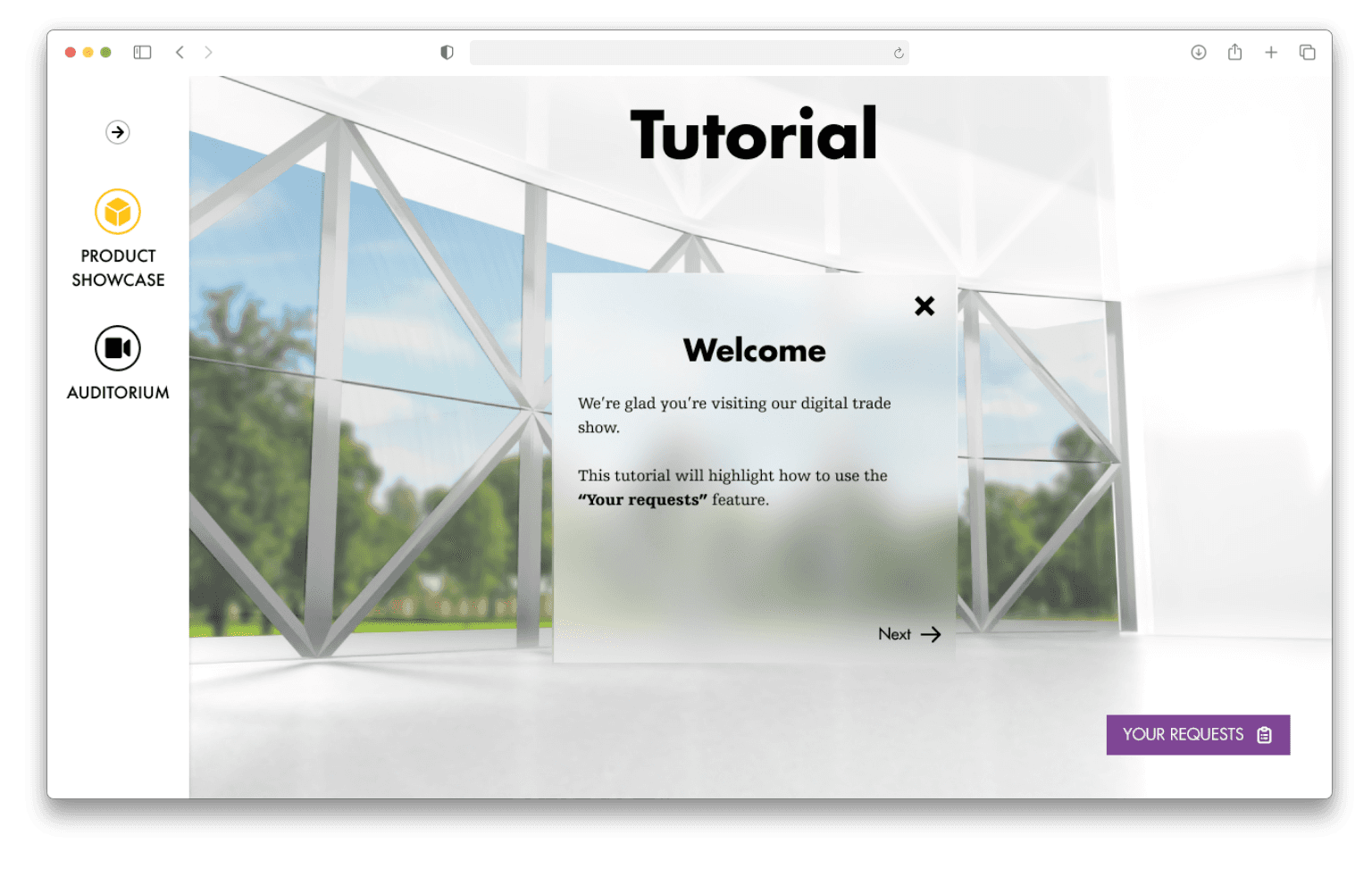
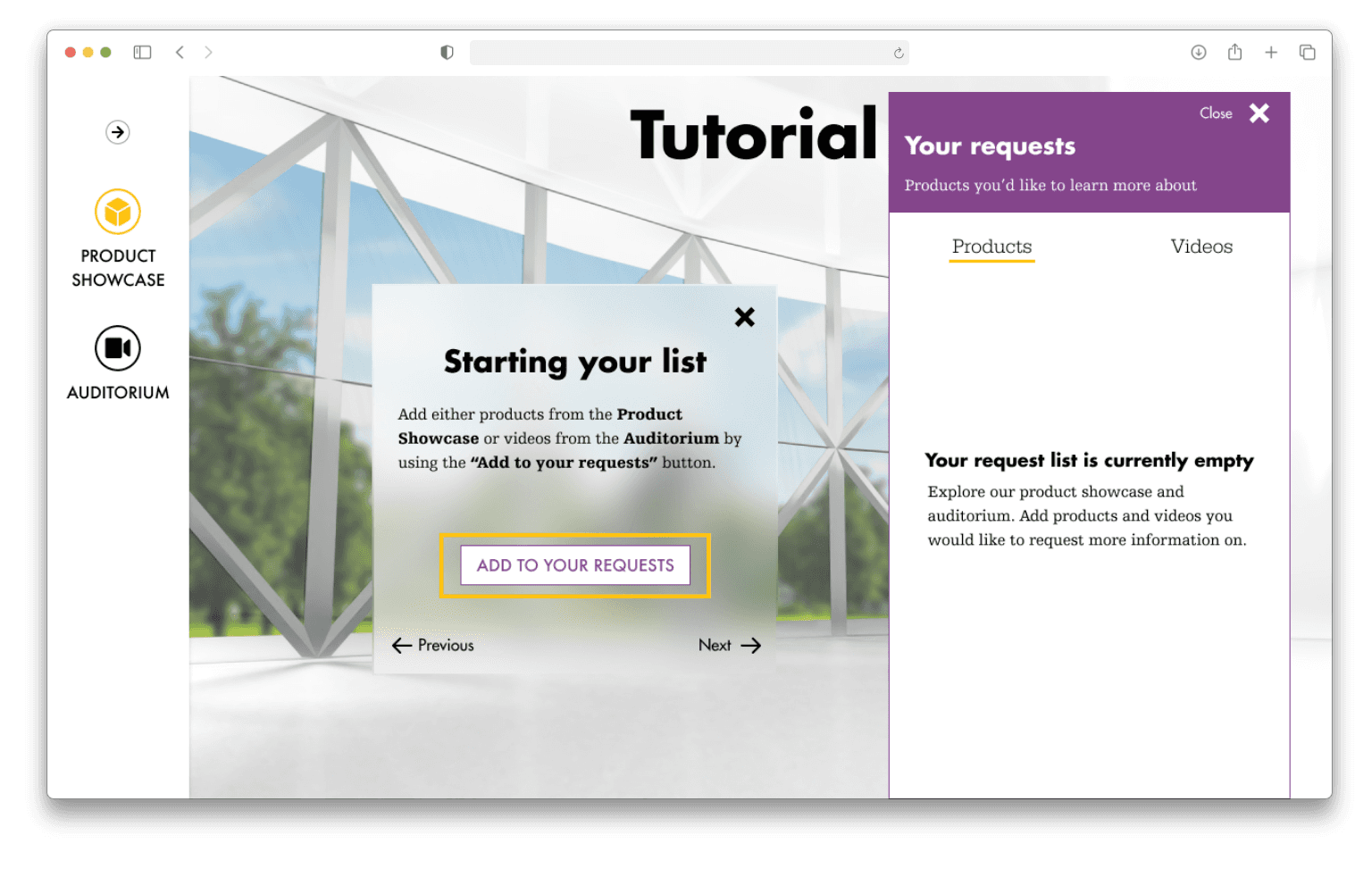
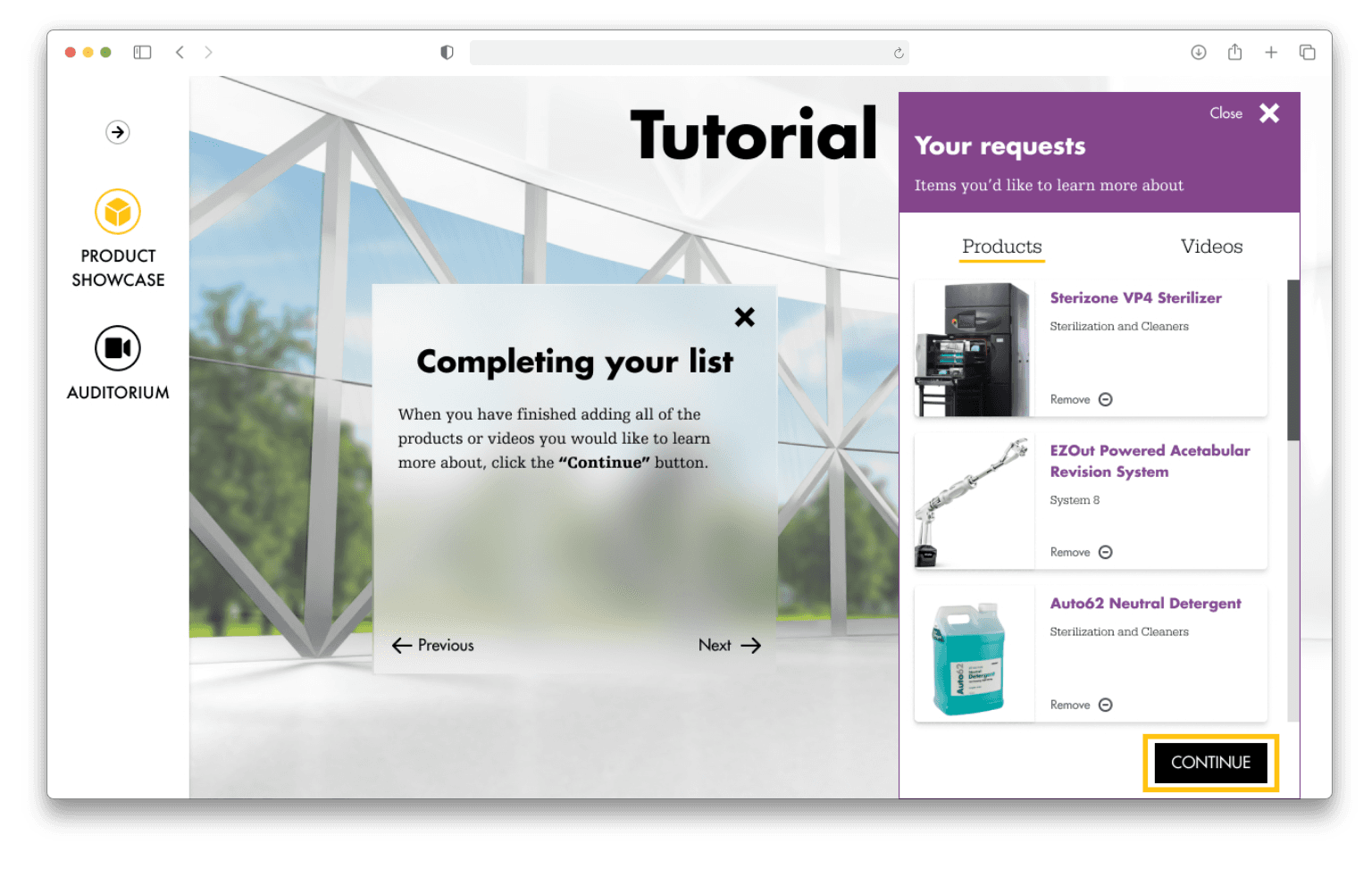
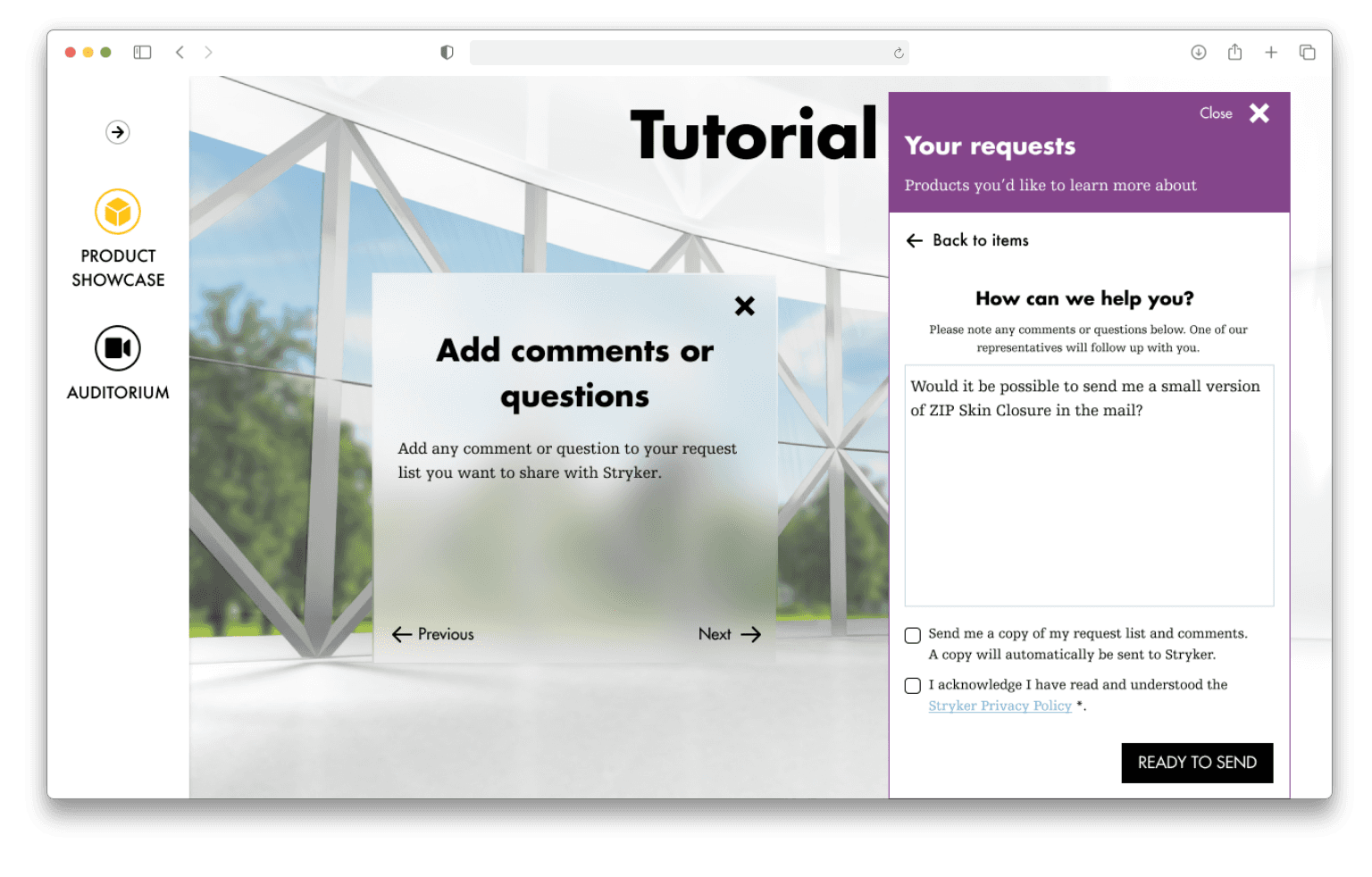
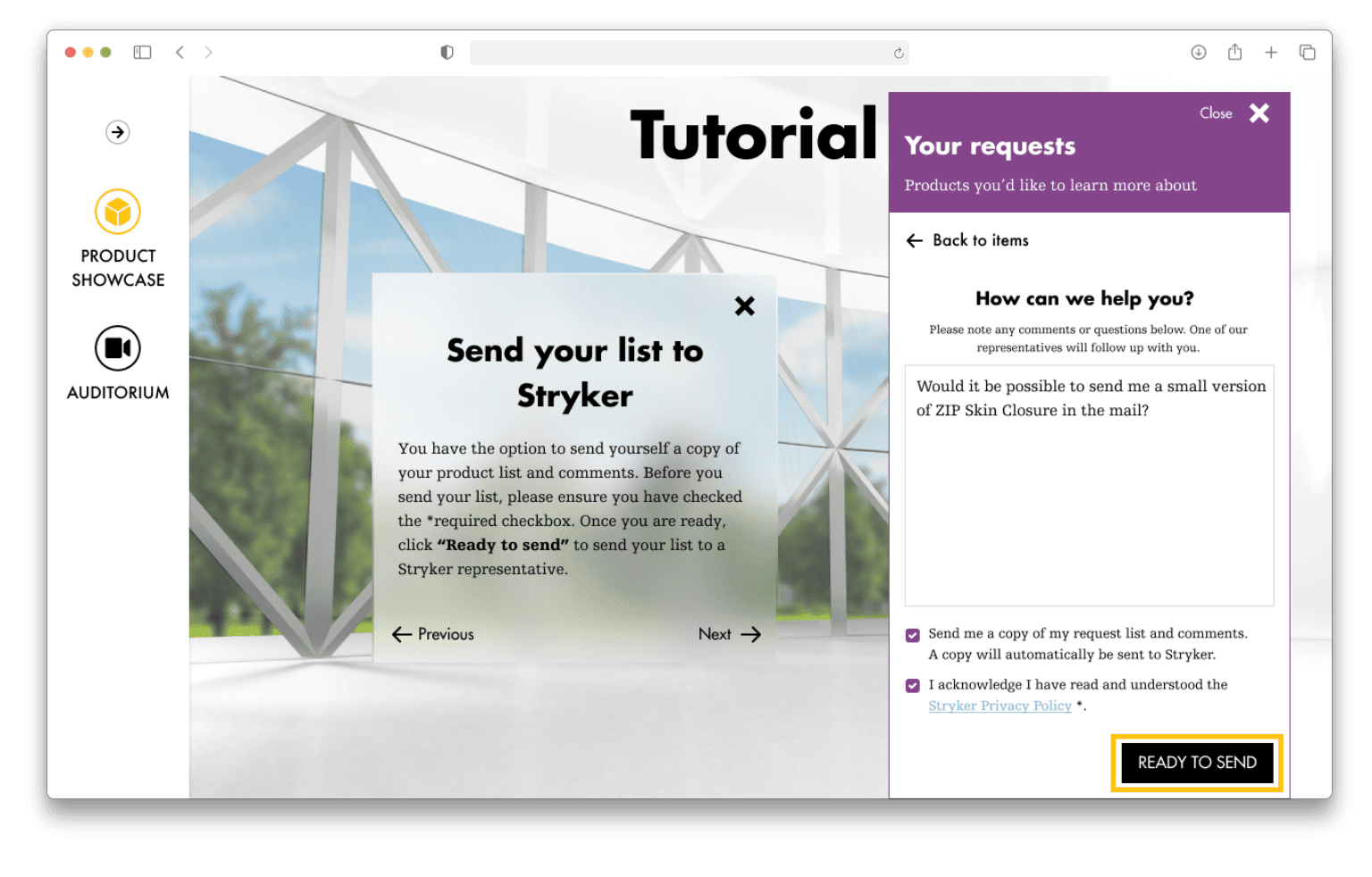
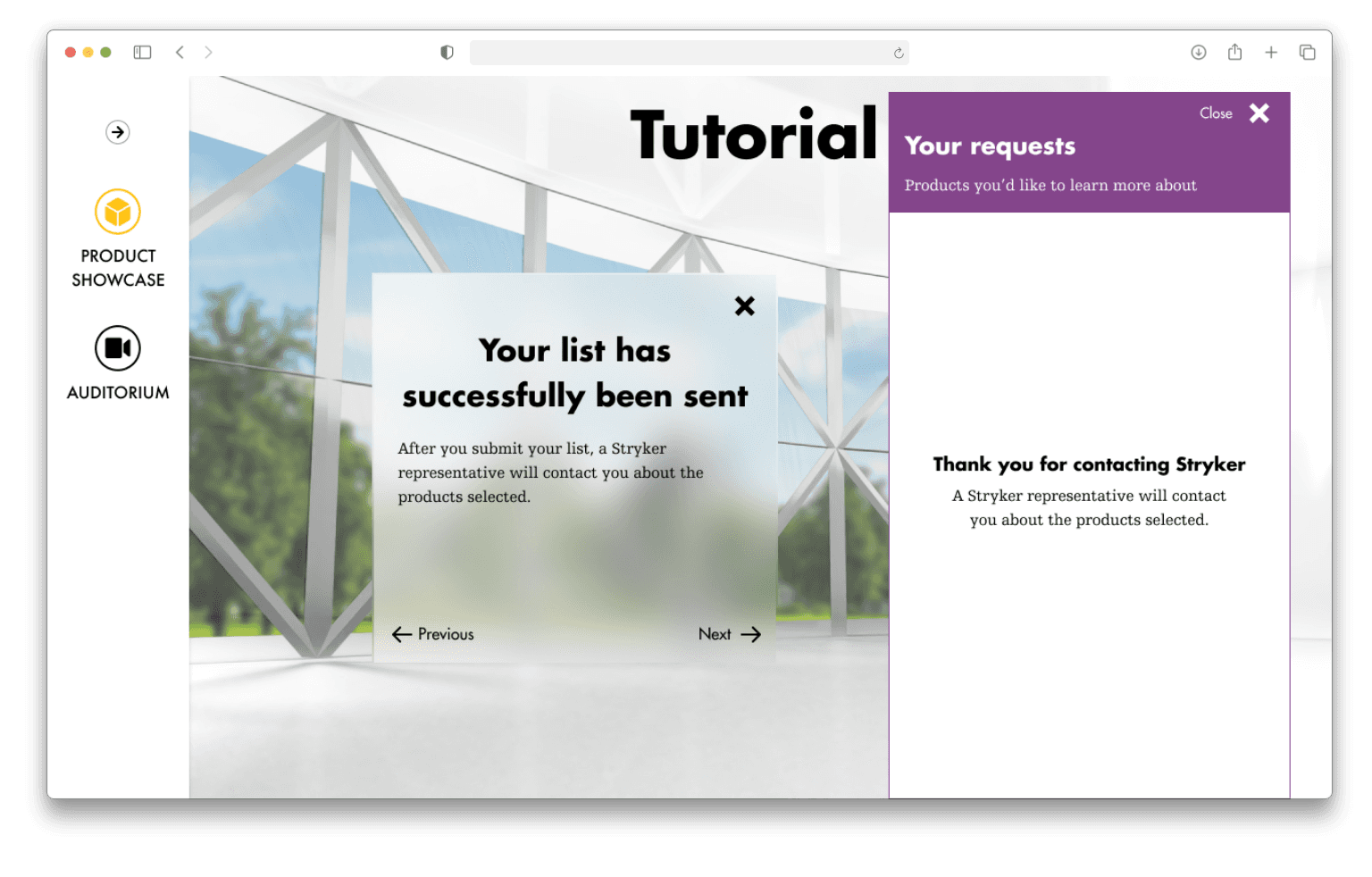
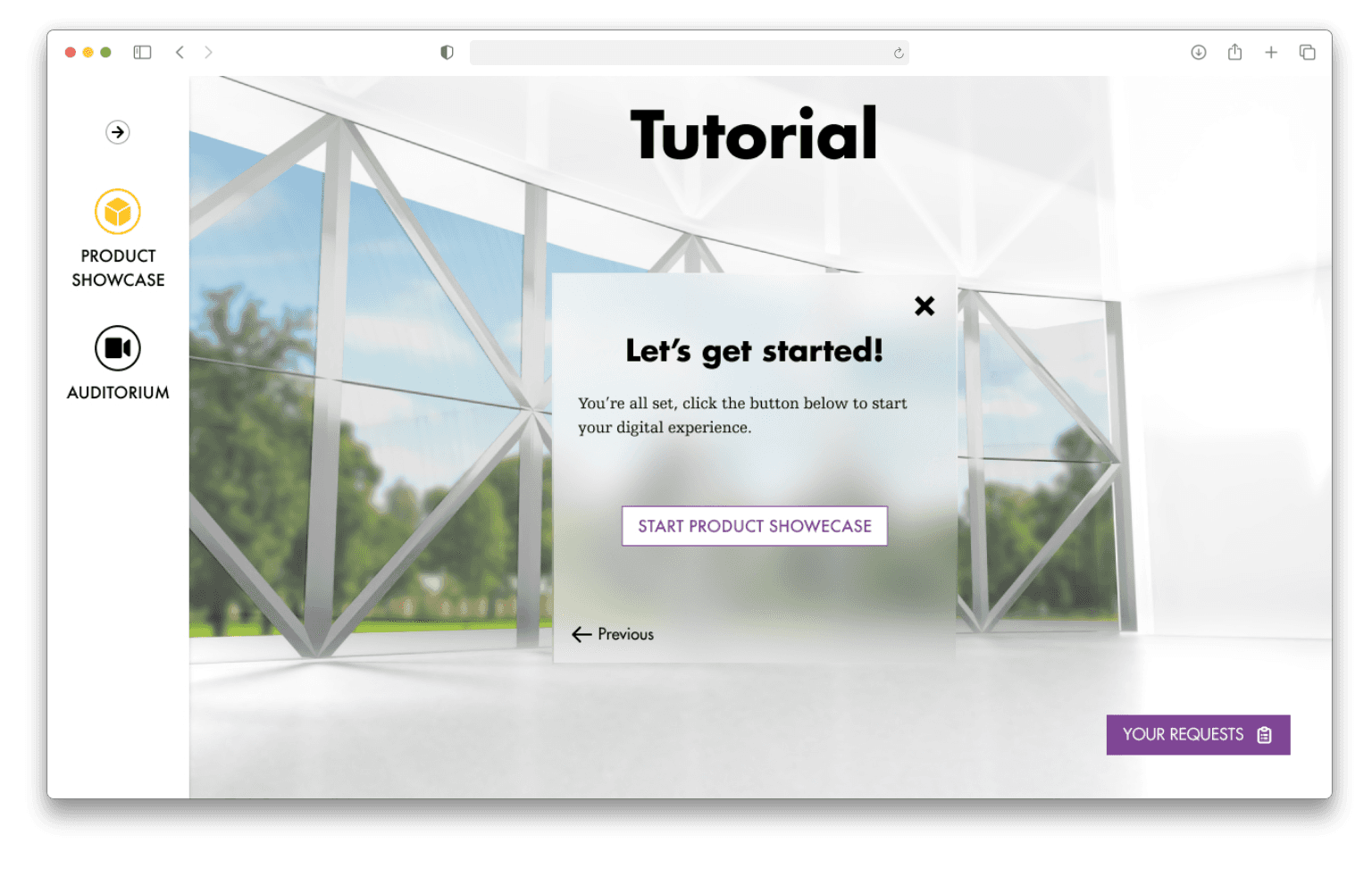
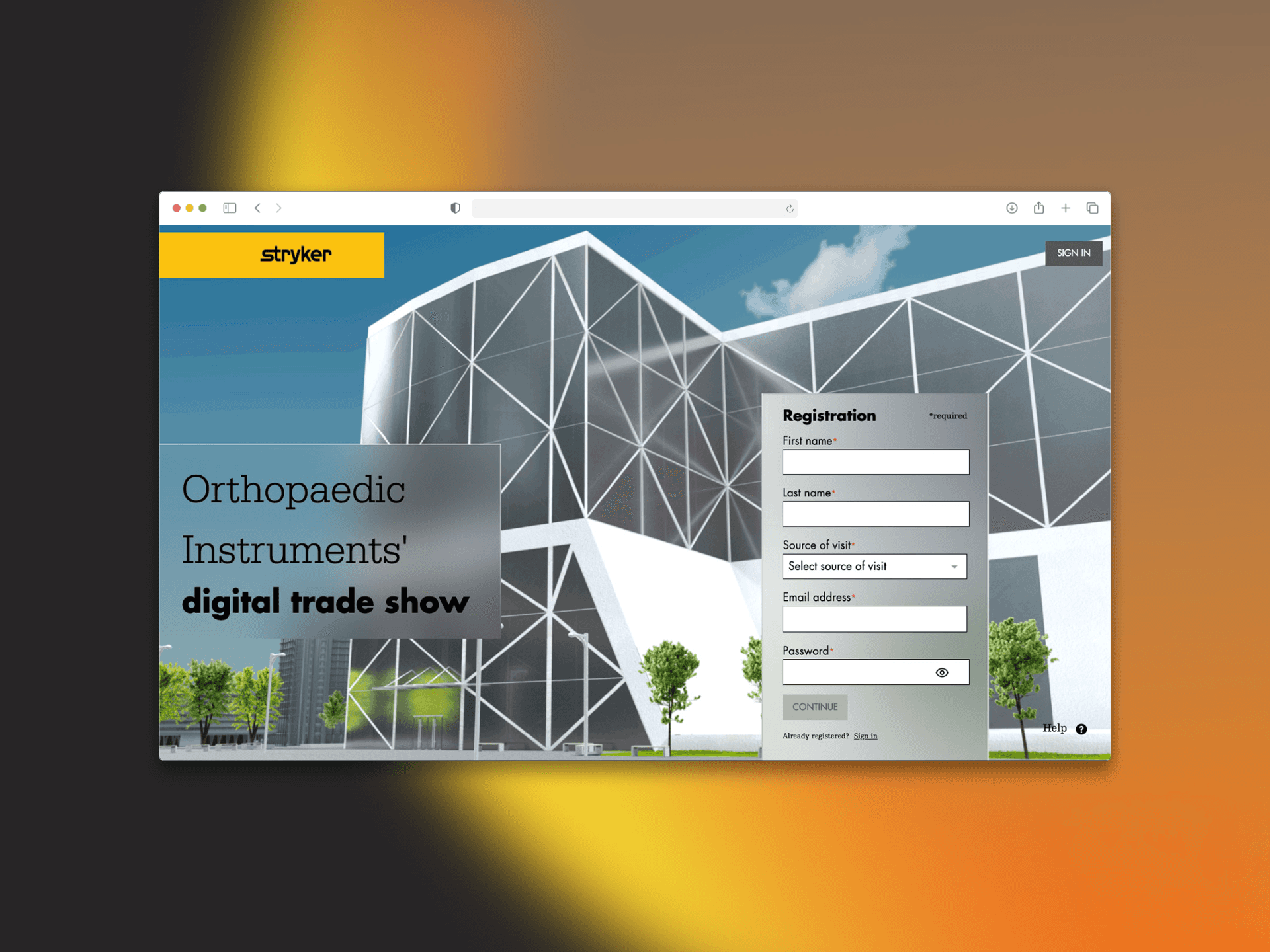
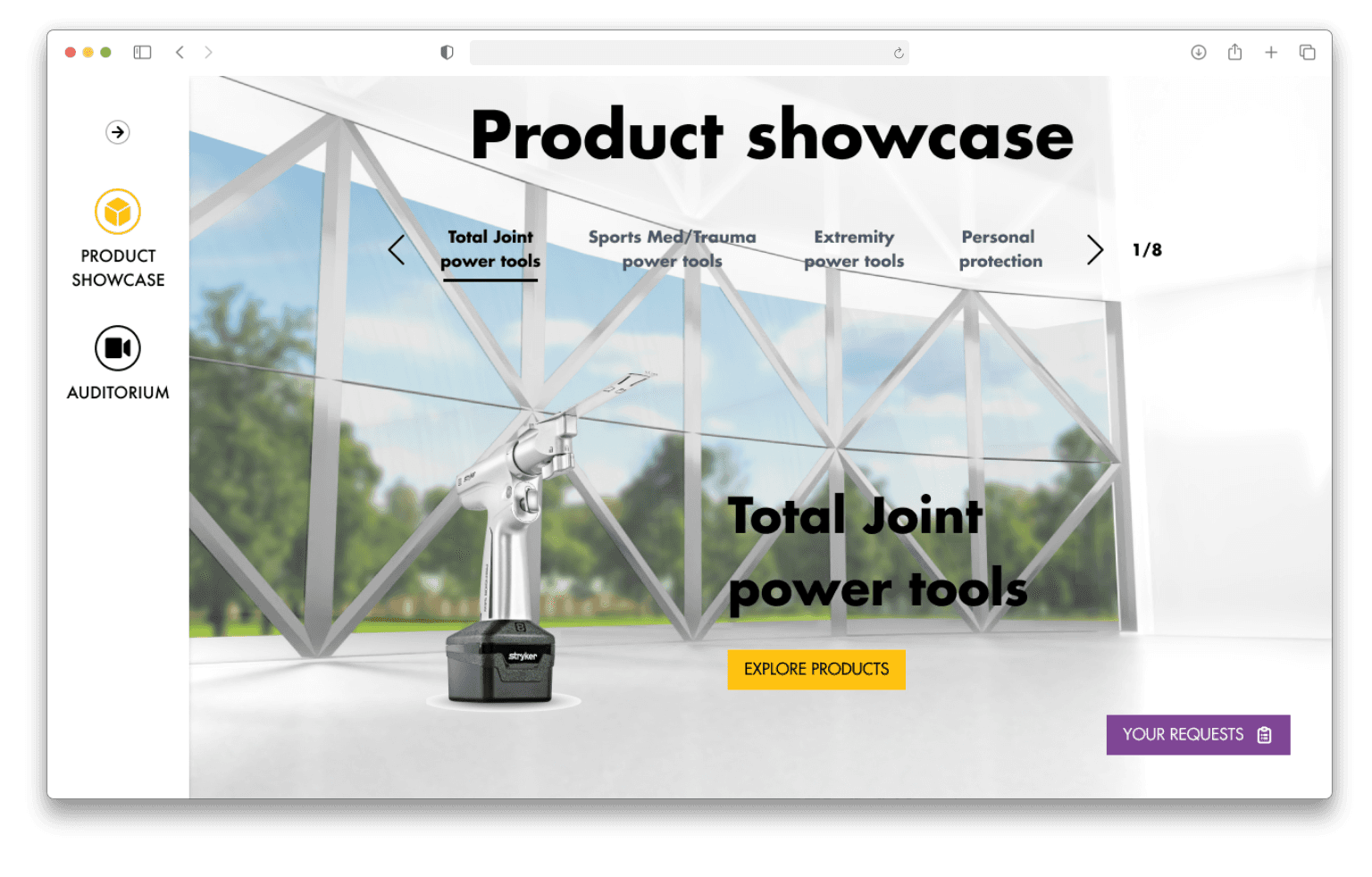
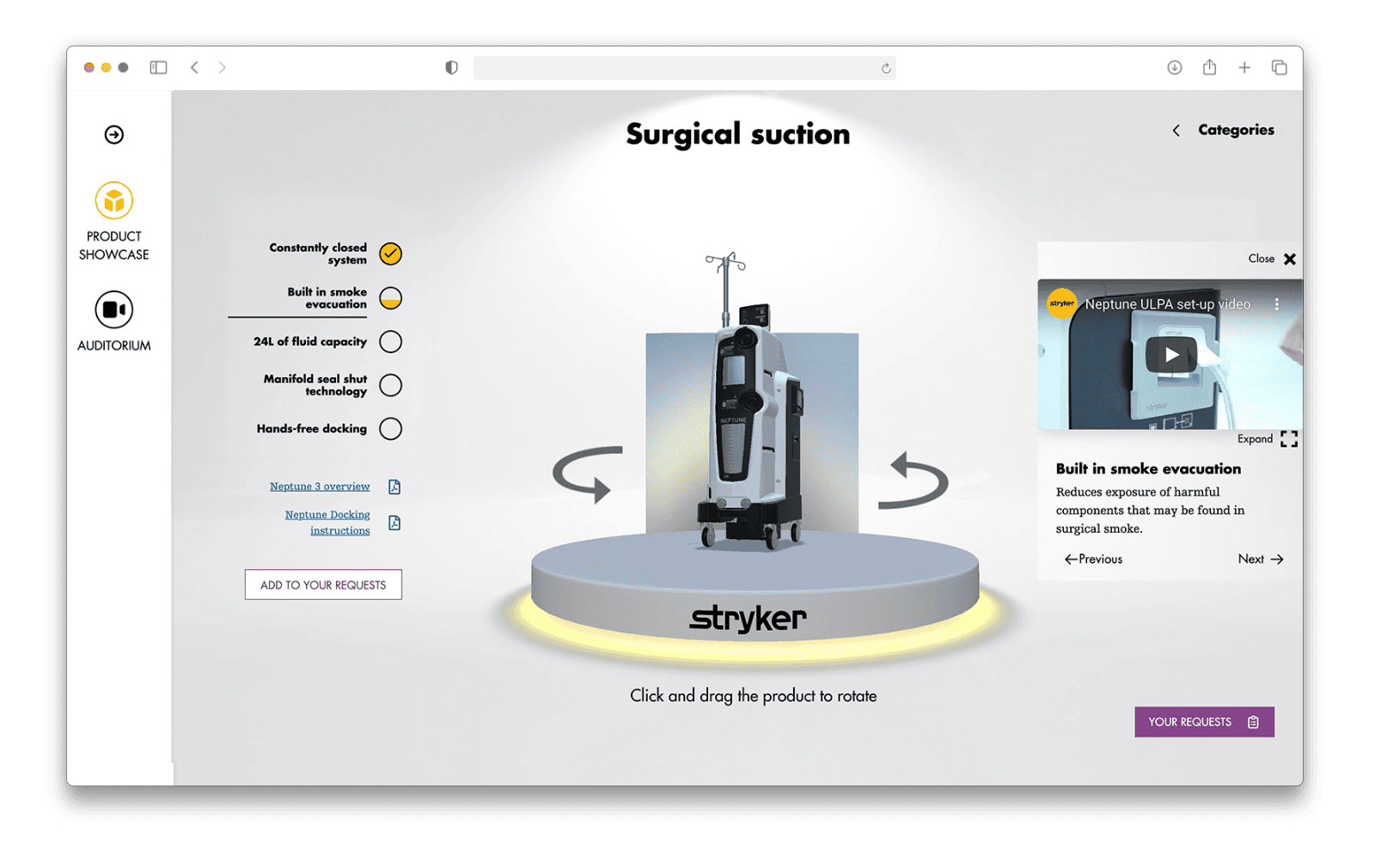
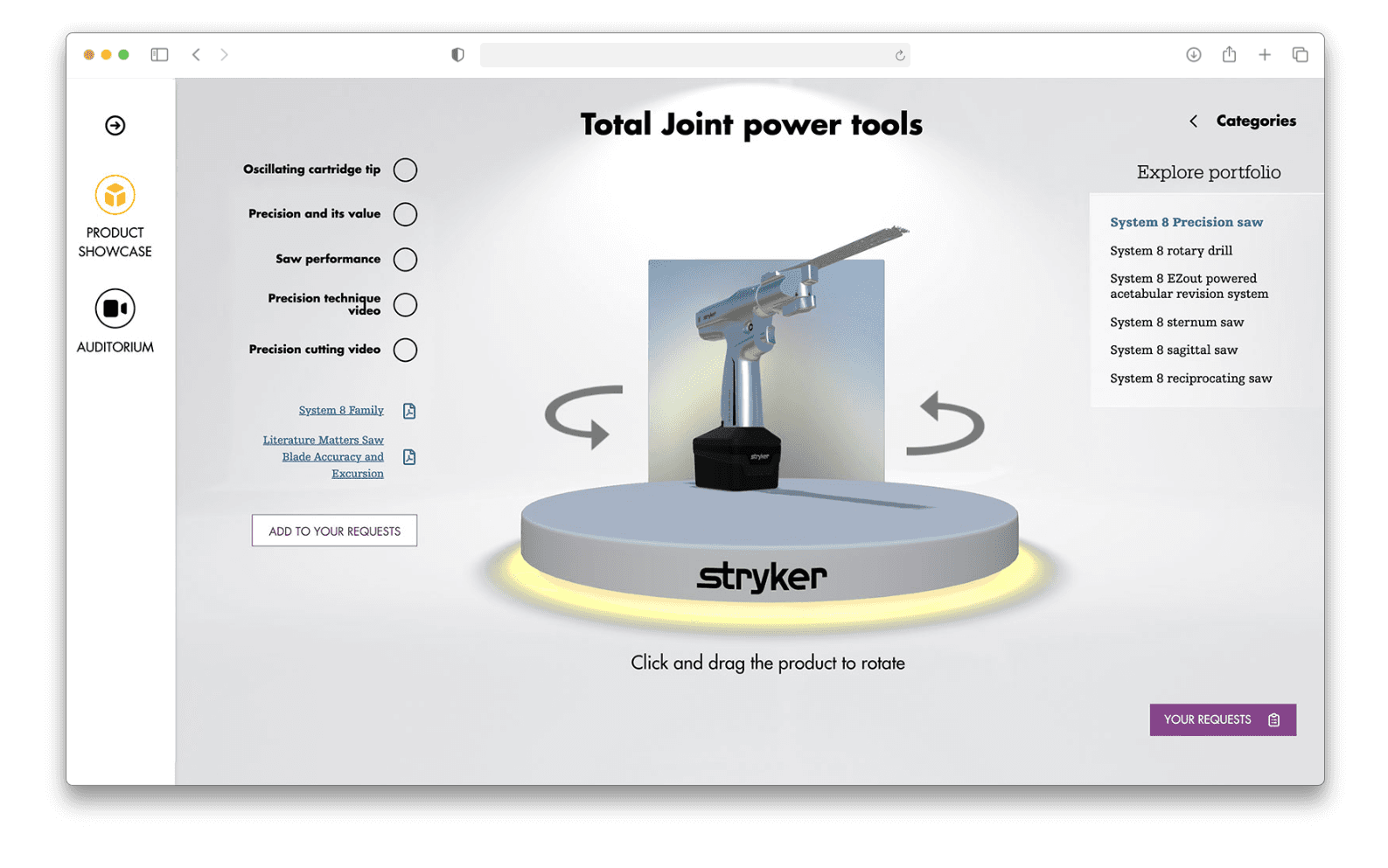
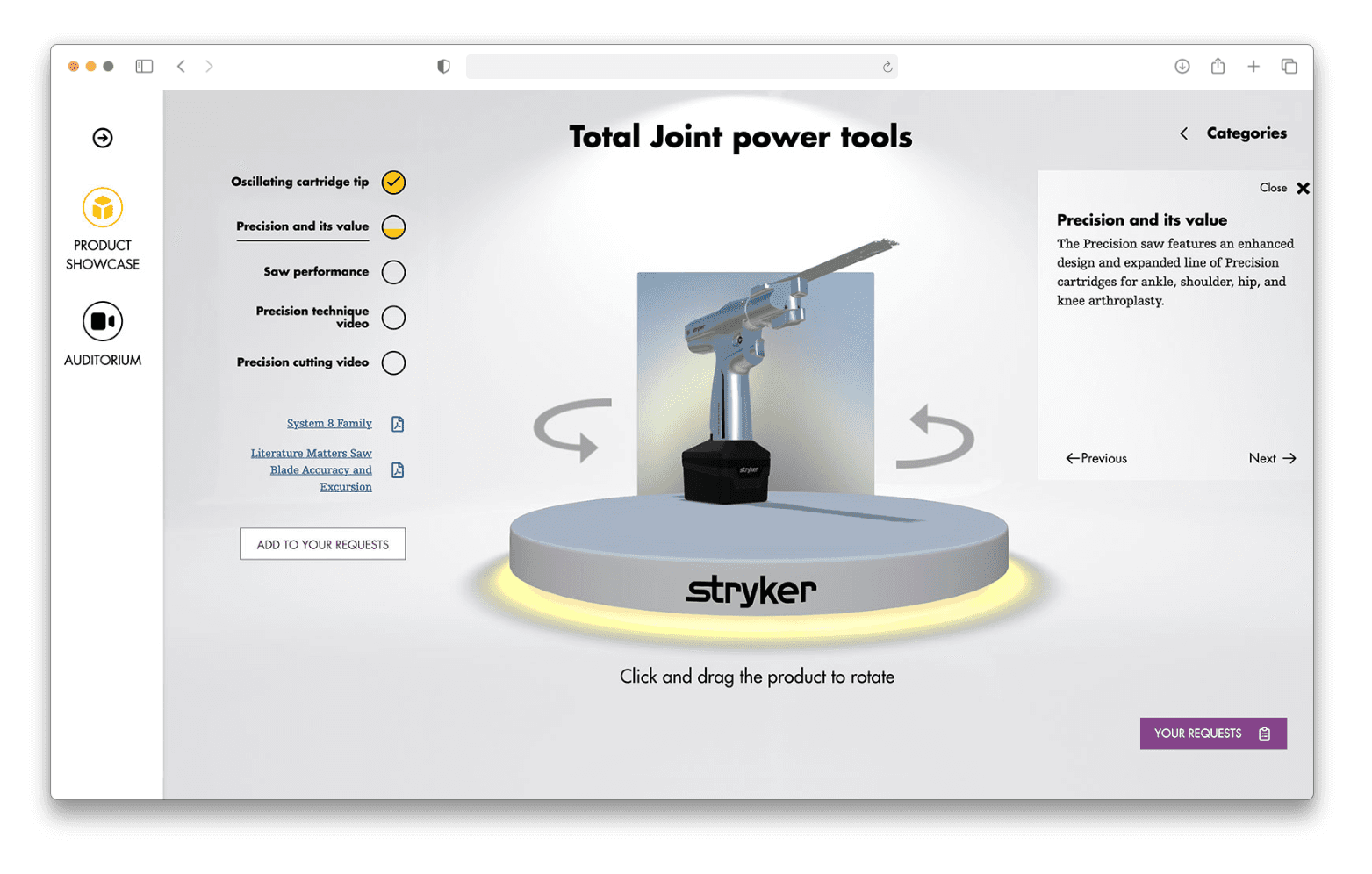
When COVID-19 restrictions eliminated Stryker Medical Instruments' full trade show calendar, their established approach to product demonstration and sales engagement was no longer viable. Stryker needed a remote solution that could replicate the impact of in-person product showcases and keep their sales pipeline active. I was brought on as a UX/UI Designer through Astound Group to help design a desktop virtual showcase platform covering product demonstration, an auditorium experience, and an admin workflow for the sales team. _____________________ Discovery and User Journey Mapping: The project began with a remote discovery workshop facilitated in Miro, where I helped define user journeys across three core workflows: the product showcase, the auditorium, and the admin portal. This foundational work ensured the platform was designed around how both clients and the sales team would realistically move through the experience. Lo-Fi Wireframes and Client Buy-In: Early lo-fi wireframes produced in Figma were presented to the client and secured sign-off before the project moved into higher fidelity. This stage also introduced a key concept I brought to the project: a "request list" feature allowing users to flag products of interest, submit questions, and receive direct follow-up from the sales team, bridging the gap between a self-guided virtual experience and a direct sales conversation. Iterating to Hi-Fi and Collaborating with Developers: Working through a design thinking process, I iterated from lo-fi to hi-fi wireframes in close collaboration with Unity developers responsible for building the 3D product visualization environment. Design updates were presented regularly to offshore developers to guide implementation and to internal and external stakeholders for approvals. The project navigated both stakeholder delays and offshore engineering delays over its six-month timeline, requiring clear and consistent communication to keep the work moving forward. _____________________ The Outcome: Initial lo-fi wireframes secured client sign-off and established the direction for the platform. Hi-fi wireframes ensured the design intent was accurately interpreted by the offshore engineering and Unity development teams. The completed platform gave Stryker a fully functional remote sales and product demonstration tool at a time when in-person engagement was not possible, with a built-in admin infrastructure to support ongoing targeted outreach. _____________________ Skills Demonstrated: UX/UI Design · Wireframing · Prototyping · User Journey Mapping · Discovery Workshops · Stakeholder Presentations · Developer Collaboration · Information Architecture · Figma · Miro
Product Showcase
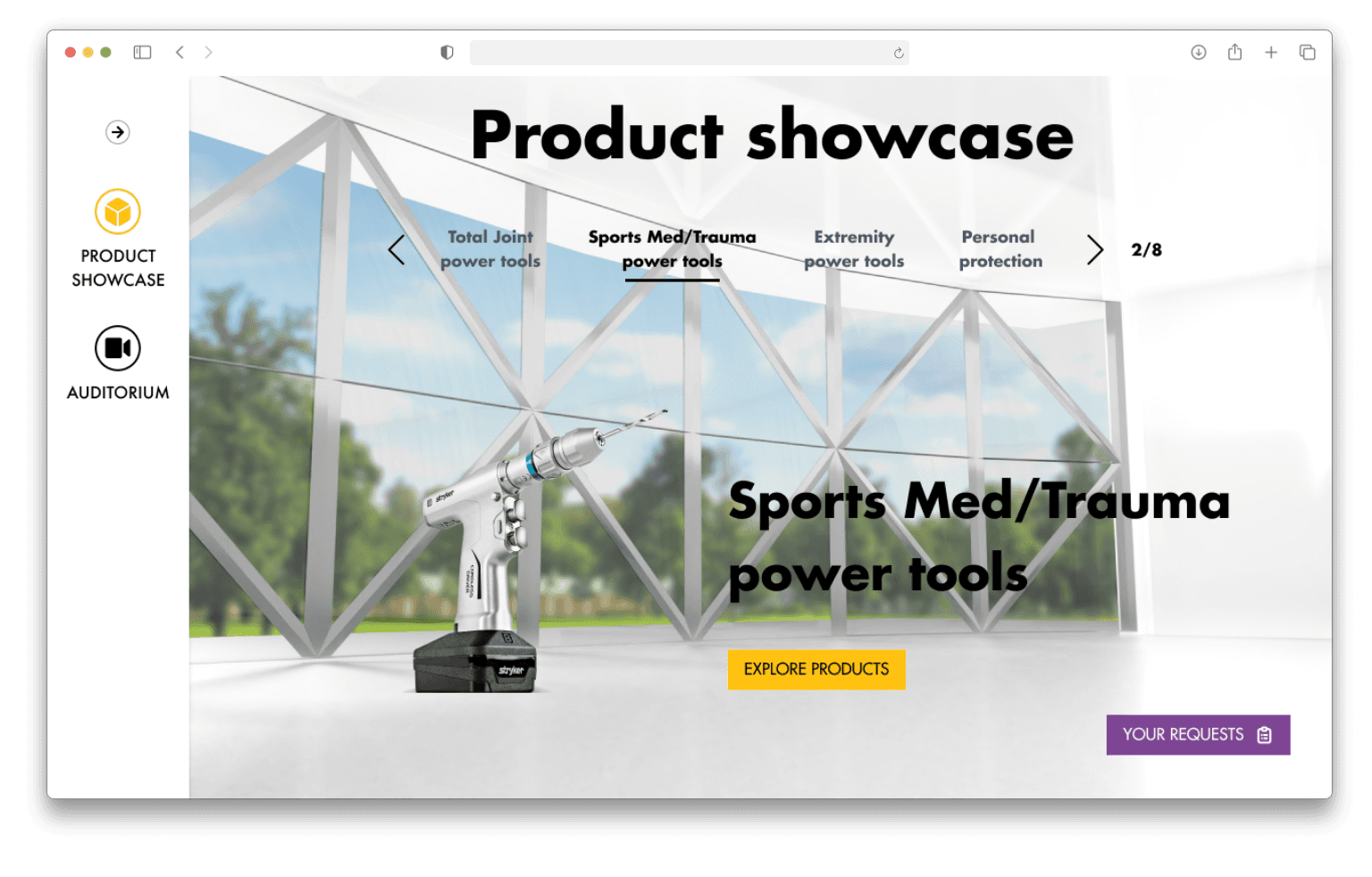
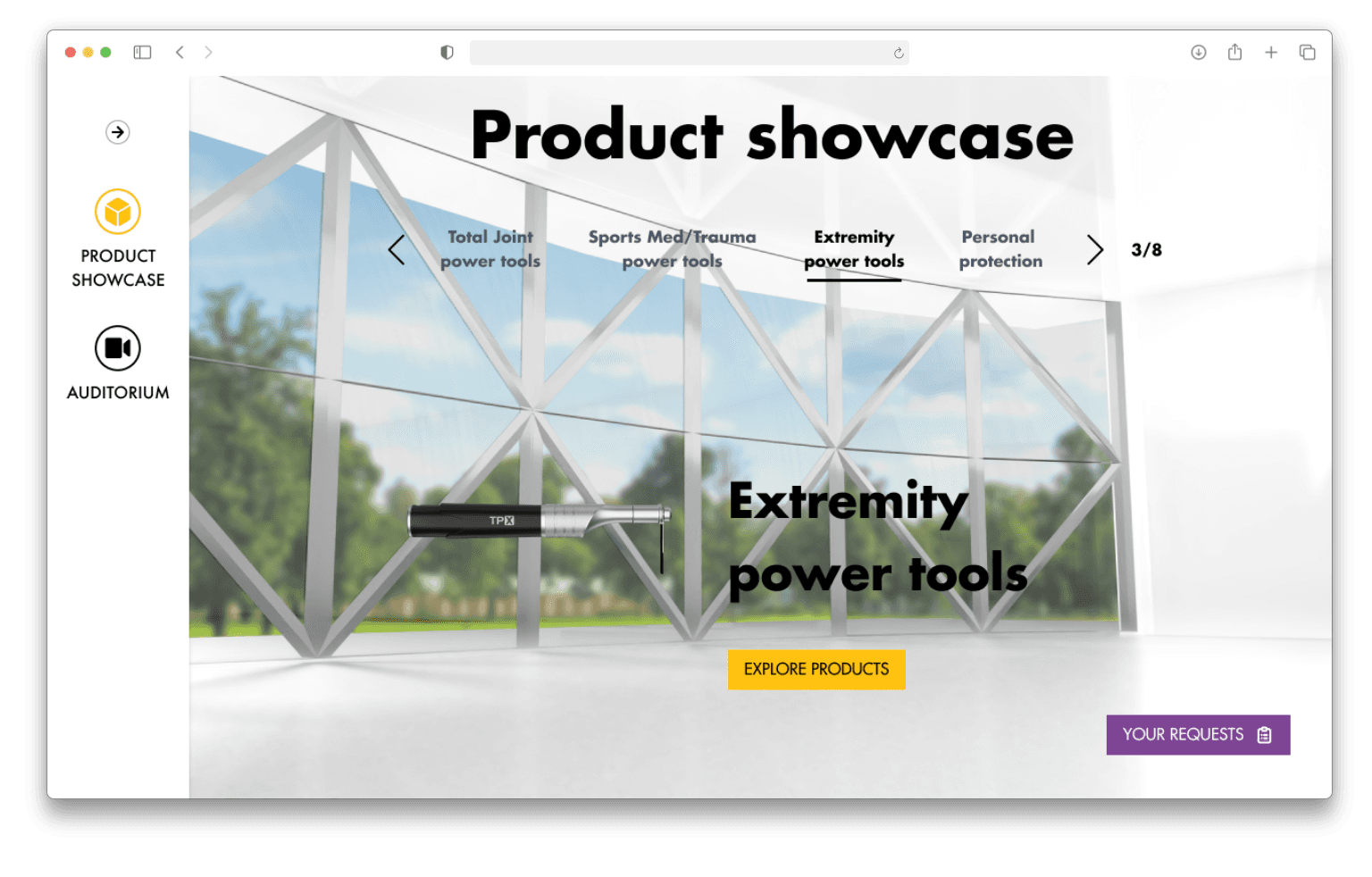
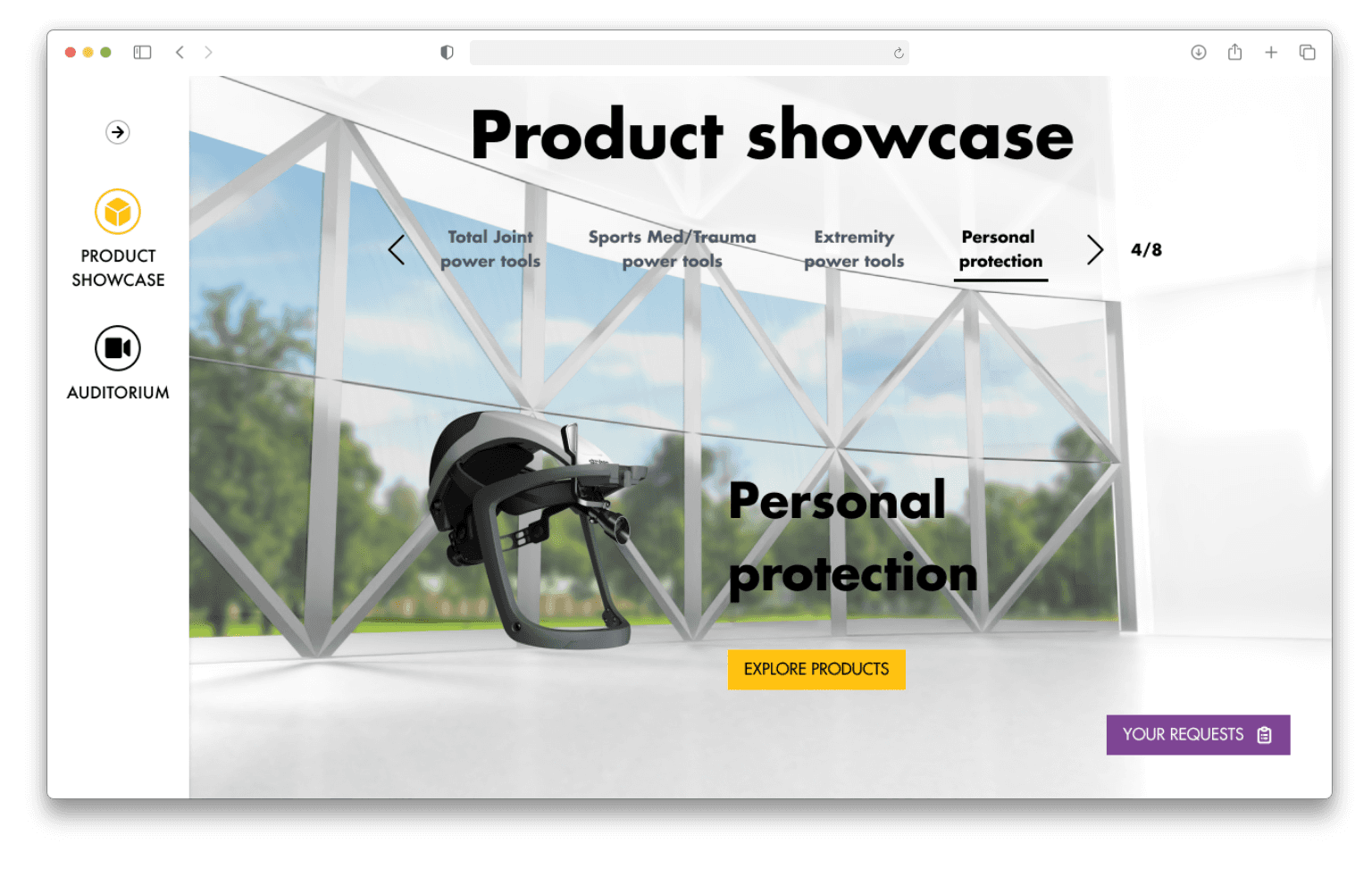
Single Product Page & Features
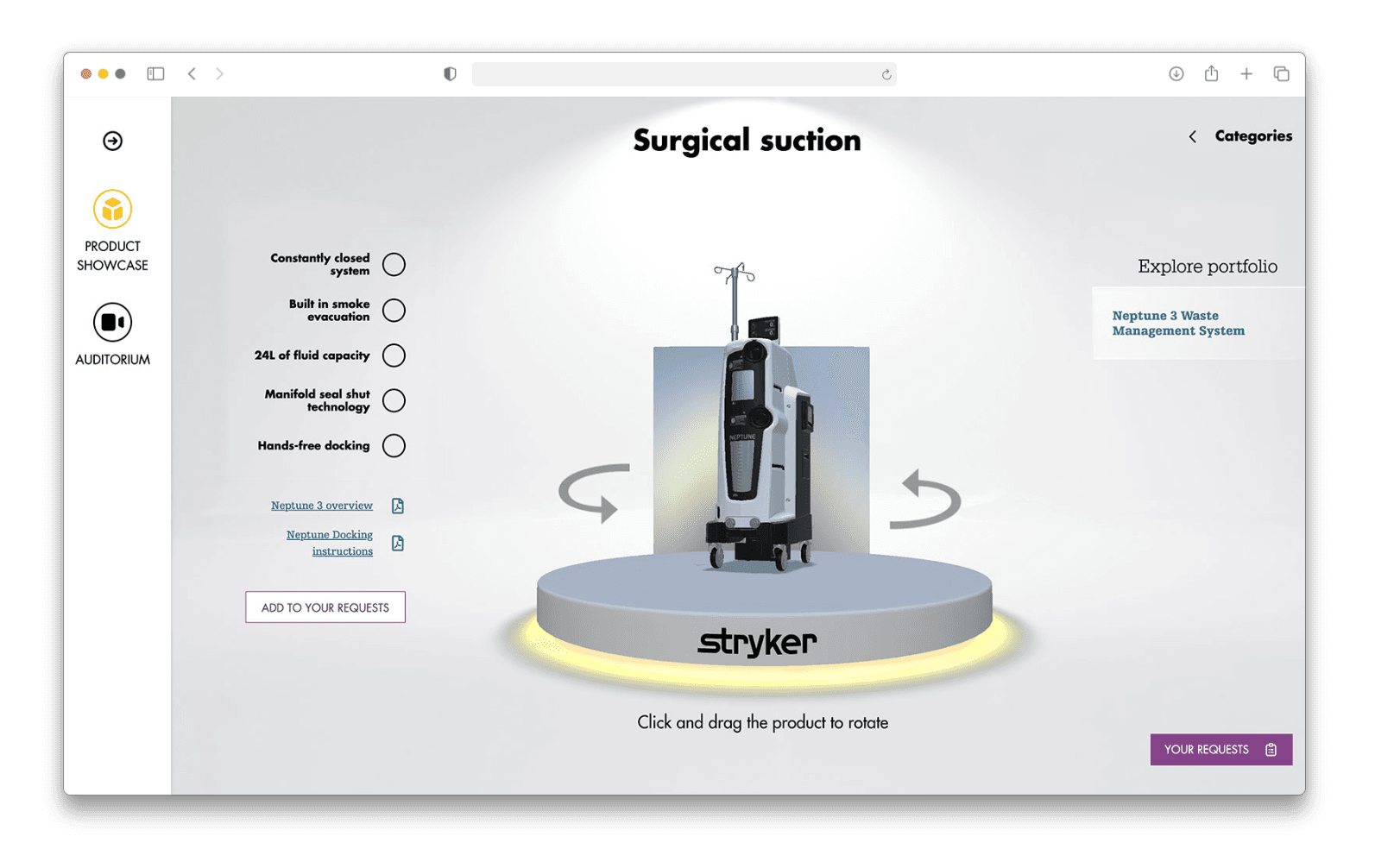
"Your Requests" Feature Tutorial